### From Restaurant Websites to a Real Management System
I’ve built several restaurant-related projects before, but Token Dine was different. This was my first experience building a complete restaurant management system where the core business operations revolve around a prepaid token system.
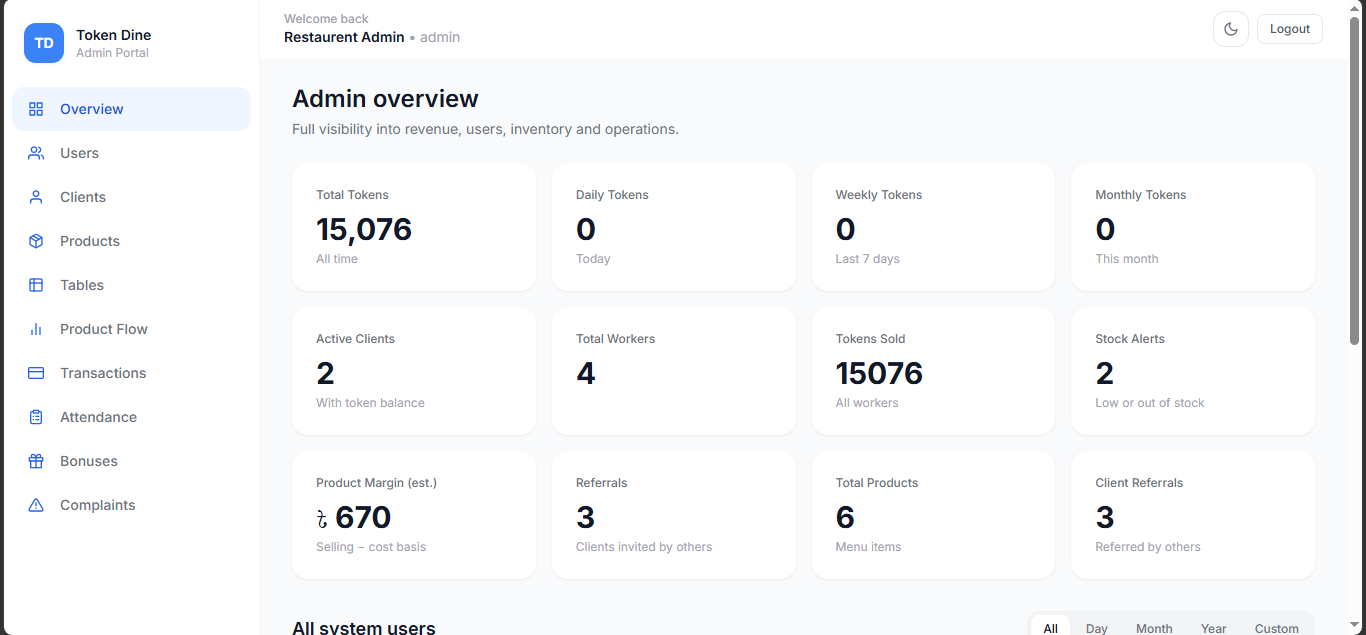
The goal was not simply to build another restaurant dashboard. The challenge was to translate real business rules into a digital workflow: clients purchase tokens, workers sell and redeem them, menu purchases reduce both inventory and token balances, managers monitor daily performance, and admins track revenue, attendance, bonuses, referrals, and overall operations.
### The Business Logic Challenge
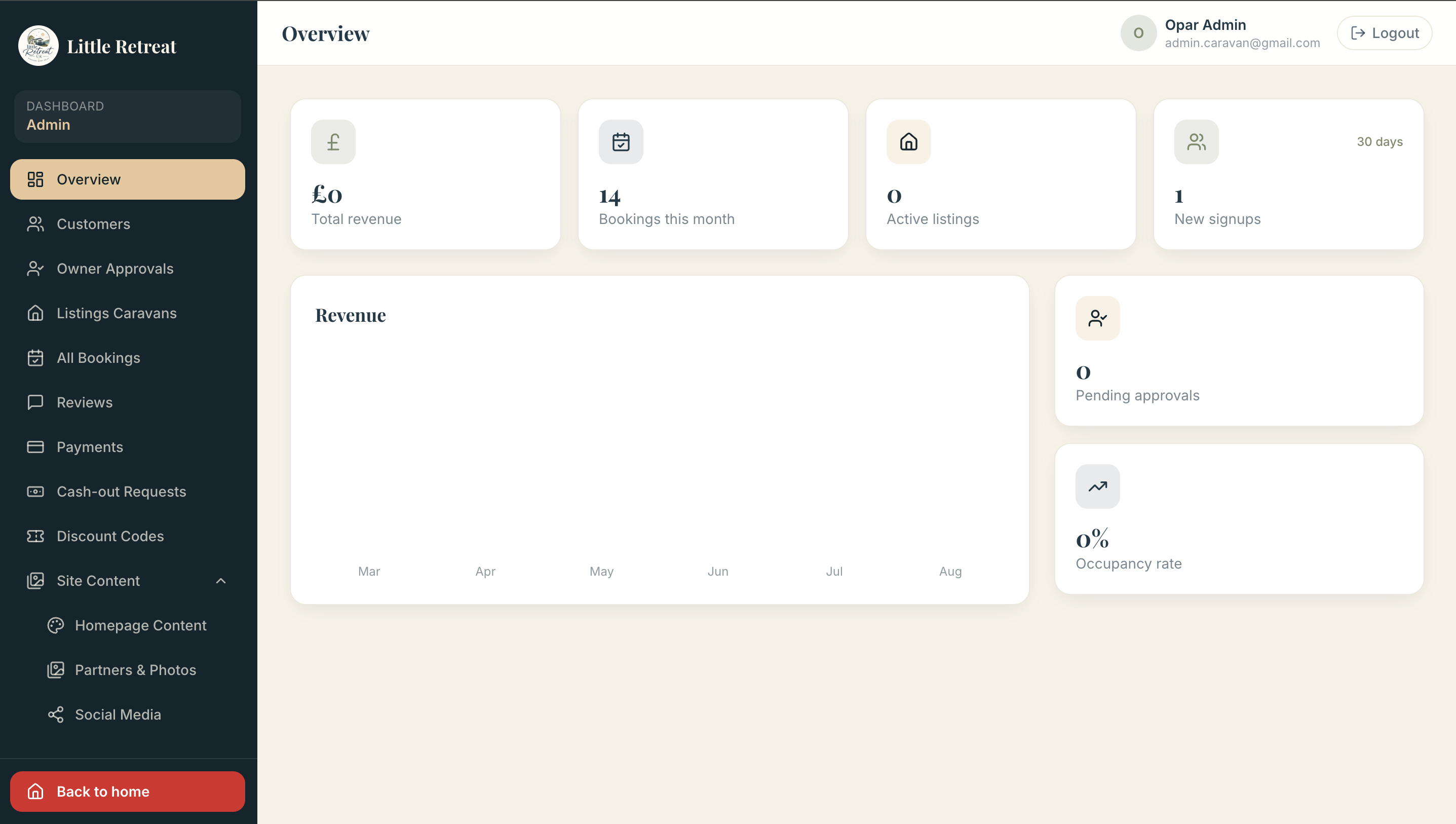
One of the most interesting parts of the project was designing the role-based workflow. Token Dine has separate Admin, Manager, Worker, and Client roles, each with completely different responsibilities and dashboards. Admins manage users, clients, products, analytics, bonuses, and complaints. Managers focus on team performance, inventory, tables, attendance, sales, and daily progress. Workers handle clients, token sales, attendance, and complaints.
The difficult part wasn't creating the pages—it was making sure the business logic behind those pages worked together correctly.
For example, when a worker sells tokens, that transaction needs to be connected to the correct client and worker. When a client purchases menu items, inventory must decrease and their token balance must also be deducted. Managers then use daily token-given versus token-sold data to evaluate workers, while admins use the collected data to understand revenue and performance.
### Turning Complexity Into a Scalable System
To keep the application maintainable, I structured the frontend around a service-layer architecture. Instead of calling Axios directly from individual pages, every backend resource has its own service, including users, clients, products, sales, attendance, complaints, bonuses, tables, progress, and analytics. This helped keep the UI separated from API logic and made the application easier to scale and maintain.
The project currently contains 25+ responsive pages across three role-based dashboards, with reusable components such as tables, modals, statistics cards, navigation, authentication, and theme controls.
### More Than Just Token Management
Another interesting feature is the referral and bonus system. When a new client joins through an existing client's referral, the referrer can automatically receive bonus tokens. On the staff side, the system can also recommend workers for bonuses based on measurable performance—attendance, tokens sold, and rating.
This made the project feel much closer to a real business system rather than a traditional CRUD application.
### Technology
Token Dine was built using **Next.js 14, React, TypeScript, Tailwind CSS, Axios, and a REST API**, with a responsive light/dark interface and a structured service-based frontend architecture. The frontend is fully connected to the live backend rather than relying on mock data.
### What I Learned
The biggest lesson from Token Dine was that building a management system is very different from building a normal website. The hardest problems are often not visual—they are understanding the business rules, defining relationships between users and transactions, handling role-specific responsibilities, and making sure every action produces the correct result across the system.
This project pushed me to think beyond components and pages and focus more deeply on **business logic, system architecture, data relationships, role-based workflows, and scalability**.
Token Dine is still an evolving project, but completing the core system has been one of my most valuable experiences as a developer. It challenged me, forced me to solve problems I hadn't faced before, and gave me a much better understanding of how real-world business processes can be transformed into software.
Next jsnode jsmongodbexpress js+6